Category: Essays

  • Charlotte Brontë’s Heroines Still Rule: Villette’s Lucy Snowe, or Why No One Lies to the Plain Girl

    Charlotte Brontë’s Heroines Still Rule: Villette’s Lucy Snowe, or Why No One Lies to the Plain Girl

    Most female protagonists have beauty slapped onto them like a complimentary suit of narrative armor. It’s incredibly practical. Beauty gets them into interesting situations, makes them important enough for the plot to care about them, and ensures every impressive male character immediately recognizes them as The Chosen One. It’s almost as if conventional attractiveness is a superpower. Every once in a while, this makes me wonder. And every once in a while, it sends me reaching for my keyboard to dissect the whole thing. So here we are.

    First of all: yeah, I get it—it feels more enjoyable to read about Scarlett O’Hara’s dazzling green eyes or Anna Karenina’s striking figure than about a fat, sweaty character describing their flushed complexion and hunchback. Fiction is fantasy. We all have our limits.
    Then there are the Anastasia Steele and Bella Swan types. Characters so spectacularly under-described that they’re basically human-shaped loading screens. Just enough detail to confirm they’re female and attractive, yet vague enough for you to project yourself onto them while watching their completely ordinary, definitely average beauty reduce every male character within a five-mile radius to a hormonal emergency. What a remarkable coincidence. Unlike some tropes that make me want to throw books across the room, this one isn’t even offensive. It’s just… aggressively uninspired. The literary equivalent of unseasoned mashed potatoes.
    And then there are the descriptions that make me wonder whether the author has ever actually seen another human being. You know the “huge violet eyes” type. Right. Every time I read something like that, I think back to the last person I met with naturally violet eyes or with eyes I’d call huge. (Spoiler: I didn’t. Neither did the author.) Unless she accidentally fell into a vat of food coloring, I’m calling bullshit.
    To be fair, describing characters is genuinely hard. You want to give readers enough information to picture them, but not so much that you bulldoze their imagination. Take the male lead. Usually we want readers to imagine him as attractive. Unfortunately, I’ve heard rumors that audiences are not, in fact, a perfectly homogeneous hive mind. Apparently there are some—allegedly—who aren’t into towering men with muscles, sculpted cheekbones, and voices deep enough to narrate nature documentaries. Inconsiderate, really. What’s a writer supposed to do with that information?
    The answers vary.
    Trashy paperbacks, at least, commit to the bit. They don’t dabble in attractiveness—they declare it legally binding. Golden waterfalls of hair. Skin described like it’s been airbrushed by angels on overtime. And the hero arrives looking like he escaped from a Greek statue convention via a testosterone explosion: two meters tall, eight-pack included, jawline sharp enough to qualify as a workplace hazard, eyes brooding as if emotionally contracted for the job. And, of course, an enormous, pulsating… uh… personality. (Yes. Personality. We’re being professional today.) Okay, fine. I’m not into paperback romance, but it’s nice to know there are options.
    Or take the “just vague enough for readers to insert their own preferences” strategy. If that works for you, fantastic. Personally, I’d like to know what the main character looks like without having to complete a psychological inkblot test. But that might just be me.
    What’s surprisingly rare, though, are characters who are simply… plain. Or unattractive. Which is weird, because the moment you stop treating beauty as the default factory setting, you suddenly unlock a thousand more interesting questions. What does beauty actually do to a person? How does it change the way they’re treated? What happens when they don’t have it? How does it shape confidence, resentment, ambition, desire—all the gloriously messy human stuff?
    Few novelists seem genuinely interested in those questions. Charlotte Brontë was.

    Her heroines—and heroes—aren’t beautiful because the plot demands eye candy every thirty pages. They’re people first. Their appearance matters because of what it means to them and to everyone around them.
    It’s fucking brilliant.
    Imagine me doing a tiny, deeply undignified dance of admiration right now.
    Because this woman absolutely fucking nailed it. The idea is that beauty functions as unearned social capital, changing the kinds of stories characters get to have. Other characters (mostly men) fawn over beautiful women, lie to them, try to stay close to them, and constantly show them their best side simply because they’re hot. These beautiful heroines rarely have to earn relationships, opportunities, forgiveness, or even respect. Men are already lining up before they’ve said a single interesting thing because they want to get into their pants… uh… marry them.
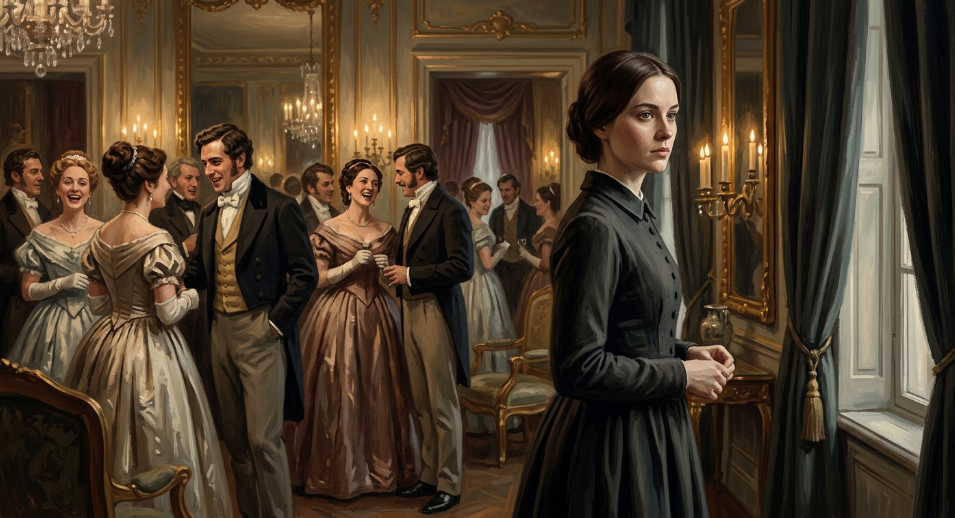
    One of my all-time favorite heroines, Lucy Snowe, can’t rely on turning heads when she enters a room. Instead, she gets plenty of room to develop her intelligence, moral strength, emotional resilience, wit, and powers of observation.

    Oh, the powers of observation. Lucy gets to see people’s real faces because they don’t bother putting on an act for her. Her plainness isn’t just an aesthetic detail; it’s a narrative constraint—and, paradoxically, her greatest advantage.
    It takes a while to see through Lucy’s eyes and to warm up to her, but once you do… well… it gets pretty intense. She knows about this. There is this amazing short dialogue when Ginevra (a beautiful, shallow, vain party girl) has been enjoying the fête, then seeks Lucy out and drags her into the dressing room to compare their appearances in the mirror. And then she tells Lucy basically the most rude, rude things like how ugly she is, how unimportant socially, and too old (yeah, Ginevra is a real POS). Lucy isn’t even bothered. She pities Ginevra, who is, to use my terminology rather than Lucy’s, dumb as bread.
    The conversation goes something like this:
    Ginevra: “I would not be you for a kingdom.”
    Lucy: “Very good.”
    Ginevra: “And what would you give to be ME?”
    Lucy: “Not a bad sixpence—strange as it may sound… You are but a poor creature.”
    Then Ginevra is astonished and asks how Lucy can think that, given Ginevra’s beauty. Lucy explains that beauty is not what she values. The crucial passage is:
    “You would not exchange your position and prospects for mine?”
    Lucy responds, in substance, that she would not exchange her own mind, judgment, and self-command for Ginevra’s beauty, because beauty without those qualities is an inferior possession. There is also another layer beneath that, because Lucy implies that Ginevra will never see the world and its people in the same depth as Lucy does, because she simply lacks the equipment (brain- and heart-wise). Lucy isn’t claiming beauty is worthless. She’s claiming that character is a better instrument for perceiving reality than beauty is for navigating it.
    That’s something to chew on, right?
    Lucy doesn’t even call Ginevra an idiot, but tells her she considers her “clever in her own way” (quite classy, love that for her).
    Lucy’s friendships, interactions, observations, and conclusions feel so much more intense. Her affection is earned, never wasted, and because she gives it only to messy, layered people like Monsieur Paul, those relationships feel fully three-dimensional and deeply interesting.

    Maybe this already sums it up: Beauty in fiction doesn’t merely attract attention; it also distorts information. Attractive people are constantly presented with edited versions of reality. Lucy, overlooked by almost everyone, receives the unedited version.
    Let that marinate for a minute.

    PS: Phew… that took longer than expected. I also understand that sometimes you’re simply not in the mood for the psychological excavation that is Lucy Snowe. On a random Wednesday, I too prefer my grumpy Katniss Everdeen. Not because she’s less interesting, but because her universe gives her roughly twelve seconds to process her feelings before launching another life-threatening emergency. Some days you want layered Victorian emotional archaeology. Other days you want Katniss Everdeen solving problems by shooting them.

    PPS: Some writers also explore beauty as a premise of demise. If you suddenly feel the need to bawl your eyes out over this particular brand of tragedy, I recommend The Lady of the Camellias (never approach that fucking book without a handkerchief. Trust me.).
  • Les Misérables: Not All Heroes Wear Capes—Some Are Named Jean Valjean and Deserve More Hype

    Les Misérables: Not All Heroes Wear Capes—Some Are Named Jean Valjean and Deserve More Hype

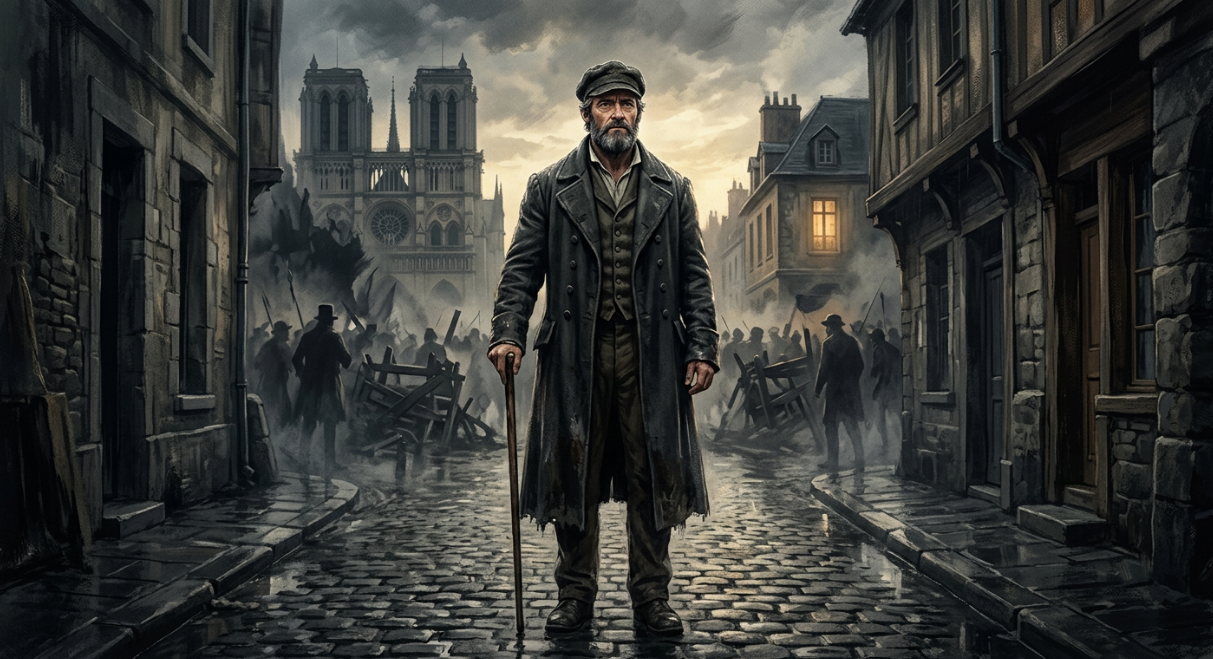
    Jean Valjean is, quite possibly, one of the most morally impressive protagonists ever written, and yet, somehow, he keeps getting emotionally benched in favor of prettier, louder, and frankly messier characters. If Les Misérables were a modern fandom, Valjean would be the guy doing all the actual work while everyone else gets thirst edits and tragic playlists. It’s not that people dislike him. It’s worse: they politely respect him and then immediately go cry about someone else.

    Which is absurd, because Valjean is doing the narrative equivalent of running a moral ultramarathon while everyone around him is busy having feelings. Yeah, I know—some of his musical numbers are almost offensively good, but I’ve noticed there’s still a shocking lack of fanfiction about him, which, as we all know, is basically the definitive scientific measure of how compelling a character is perceived to be. By the way, I am not counting the homoerotic drawings of Valjean and Javert. (Like, truly groundbreaking stuff—two men making eye contact for 0.8 seconds and the internet immediately declares it a Victorian situationship. Can we have two male characters with tension that is not automatically interpreted as romantic tragedy coded in candlelight and repression? Yes? Cool. Thanks.)

    So, I’m here today to give that man the love he deserves. Off we go.

    Let’s start with what makes him so compelling. Valjean is not just “a good man.” That phrase is too soft and too vague. Valjean is a man who is repeatedly, aggressively, almost comically given opportunities to do the easy thing—and says no every single time. Not because it benefits him. Not because anyone would know. Not because it will make him happy. But because it is right.

    And the novel goes out of its way to make sure you understand that the easy choice would be completely justified.

    This is crucial. We’re not talking about a character choosing between obvious good and absolute evil. We’re talking about a man who has been brutalized by the system, dehumanized, imprisoned, and then—when he finally claws his way into a stable, respectable life—is asked, over and over again, to risk everything for abstract moral principles.

    And each time, the narrative basically leans over and whispers, “Look, man, no one would blame you if you didn’t.”

    Stay silent and let an innocent man be punished? Honestly, given what Valjean has suffered, who’s going to judge him? Reveal himself and lose everything? That’s unhinged behavior. Spare a man who has dedicated his life to destroying you? At that point, we’re well into the realm of “are you kidding me, sir?”

    And yet he chooses the harder path. Every. Damn. Time.

    That’s what makes him inspiring in a way that feels almost uncomfortable. Because most modern protagonists are designed to be relatable in their flaws. They hesitate, they rationalize, they spiral, they make bad choices and then feel bad about them in aesthetically pleasing ways. Valjean, on the other hand, feels like a walking indictment of your personal moral compromises.

    You can’t read his story without, at some point, thinking, “Well, shit. What would I do?”

    And the honest answer, for most of us, is: not that.

    Which is probably one reason he doesn’t get the love he deserves. It’s a lot easier to emotionally invest in characters whose struggles mirror our own messiness than in someone who consistently rises above it. Valjean doesn’t validate your excuses. He quietly obliterates them.

    But there’s more going on here than just discomfort. There’s also the issue of narrative flashiness. Valjean’s defining trait is moral consistency—and moral consistency is not sexy. It doesn’t come with dramatic speeches or explosive breakdowns. It doesn’t lend itself to viral moments. It’s repetitive by nature (which is also kind of hilarious, considering he’s cartoonishly strong and should have chest and back muscles that would make early Fabio blush with shame).

    Meanwhile, other characters get to suffer loudly. They get unrequited love, doomed idealism, emotional monologues, and aesthetically tragic deaths. They bleed onstage. Valjean, by contrast, suffers in a way that is quieter and, frankly, less immediately gratifying to watch. His pain is not about expression. It’s about restraint.

    And restraint is a hard sell in a culture that thrives on spectacle.

    There’s also the small matter of romance—or rather, the lack of it. Valjean is not a romantic lead. He is not here to sweep anyone off their feet or deliver heart-fluttering declarations. His central relationship is parental, not romantic, and while that is arguably more meaningful, it doesn’t get the same kind of obsessive attention. People will write essays, songs, and entire personality identities around tragic love stories. A man dedicating his life to raising a child he chose to love? Apparently less exciting.

    Which is ridiculous, because that relationship is one of the most profound in the entire novel. Valjean doesn’t just care about Cosette. He builds his entire life around her well-being. He sacrifices not just his safety but his happiness, his identity, and eventually his place in her life so that she can have a future. Remember that part when he leaves the monastery where he was so happy because he felt he owed her a more normal life? When he saved Marius just for her? Man, that hit home.

    And he does it without demanding recognition.

    That last part is key. Valjean’s goodness is not performative. He is not doing the right thing so that people will see him as good. In fact, most of the time, doing the right thing actively damages how he is perceived. He is misunderstood, mistrusted, and ultimately sidelined.

    In a world obsessed with visibility, Valjean is out here doing invisible moral labor like it’s his full-time job.

    And then there’s the elephant in the room: the whole Christian moral framework thing. Valjean’s story is deeply rooted in ideas of grace, redemption, and self-sacrifice. His transformation is not just psychological; it’s spiritual. He becomes the man he is because he is shown mercy, and he spends the rest of his life paying that mercy forward.

    For modern audiences, that can be a bit… unfashionable. Not necessarily because people actively reject it, but because it doesn’t align neatly with contemporary storytelling trends. We prefer our morality complicated, our ethics situational, our heroes a little bit broken in ways that excuse their bad behavior.

    Valjean is complicated, but not in that way. His complexity lies in the difficulty of his choices, not in their ambiguity. He knows what is right. The question is whether he will do it.

    And he does.

    Of course he does.

    It’s almost irritating.

    Because it raises the uncomfortable possibility that being a good person is not about endless internal debate or emotional catharsis, but about making hard choices and sticking to them. There’s no shortcut, no clever workaround, no morally gray loophole that lets you have your cake and eat it too.

    Just a series of decisions where you either step up or you don’t.

    So why doesn’t he get the same level of love as the more obvious dramatic elements of the story?

    Part of it is adaptation. When the story is condensed, streamlined, and turned into something more immediately digestible, the quieter aspects of Valjean’s character tend to get flattened. His long, internal struggle becomes a few key moments. His moral evolution becomes a backstory. Meanwhile, the more visually and emotionally explosive parts—the romance, the revolution, the tragedy—take center stage.

    It’s not that Valjean disappears. It’s that he becomes the backbone rather than the highlight.

    And backbones, as it turns out, are not what people tend to fixate on.

    But part of it is also a broader cultural issue. We are, collectively, a bit suspicious of characters who are “too good.” We assume they must be boring, unrealistic, or lacking depth. We equate moral clarity with simplicity, which is frankly a failure of imagination.

    Because there is nothing simple about what Valjean does.

    It is incredibly difficult to consistently choose integrity over convenience, compassion over resentment, and truth over self-preservation. It requires strength, discipline, and a willingness to accept loss without bitterness.

    Valjean is not boring. He is operating on a level that most characters—and most people—don’t even attempt.

    And maybe that’s the real reason he doesn’t get the attention he deserves.

    He’s not just a character you watch. He’s a character who watches you back.

    You can admire a tragic romantic figure from a safe emotional distance. You can sympathize with a flawed protagonist and feel validated in your own imperfections. But Valjean doesn’t let you off the hook that easily. He forces you to confront the gap between who you are and who you could be.

    And that’s a lot less flashy than crying over a doomed love story.

    But it’s also a lot more meaningful.

    Because long after the dramatic moments fade—the barricades, the heartbreak, the big, sweeping emotions—what stays with you is the quiet, stubborn, almost infuriating persistence of a man who kept choosing to be better.

    Every single time it mattered.

    And if that doesn’t deserve more love, then frankly, we might all need to rethink what the hell we’re paying attention to.